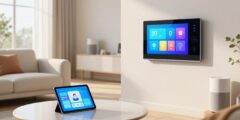
Imagine having a personal assistant that can play your favorite music, set reminders, and even control the lights in your home with just your voice. Welcome to the world of smart speakers, a technology that’s quickly becoming a big part of our lives.

For newcomers, a smart speaker is more than just a speaker. It’s a way to make your home more convenient, connected, and controlled. With this guide, you can discover all the amazing things these devices can do.
As you begin, it’s important to know the basics of smart speakers and how they can improve your home. This guide will cover the essentials. It will help you make smart choices as you dive into smart home technology.
Key Takeaways
- Smart speakers offer a convenient and connected living experience.
- They can control various smart devices in your home.
- A beginner’s guide helps you understand the basics and potential of smart speakers.
- You can enjoy enhanced home entertainment with smart speakers.
- Smart speakers are a gateway to a more controlled and automated home.
The Voice Revolution: How Smart Speakers Are Transforming American Homes
Smart speakers are changing how Americans live and work at home. They use voice assistant technology, making them key in today’s homes.
Latest Adoption Statistics for 2023
More and more people are getting smart speakers. Now, over 120 million Americans own one. Most homes have at least one.
| Year | Smart Speaker Ownership (Millions) | Household Penetration |
|---|---|---|
| 2021 | 100 | 30% |
| 2022 | 110 | 33% |
| 2023 | 120 | 36% |
Why Voice Assistants Are Becoming Household Essentials
Voice assistants are becoming must-haves because they’re convenient and efficient. They let users control smart home devices, play music, and more with just their voice.

Their convenience is a big reason for their popularity. They make daily tasks easier, improving our living experience.
What Makes Smart Speakers “Smart”: Technology Behind the Magic
Smart speakers are smart because of their core components and AI-driven voice recognition. They have several key technologies that work together. This provides a seamless user experience.
Core Components and How They Function
Smart speakers use both hardware and software to work. The main parts include:
- Microphones: These capture your voice commands, allowing the speaker to understand and respond to your requests.
- Processors: Powerful processors handle the complex tasks of interpreting voice commands and executing actions.
- Memory: Adequate memory ensures that the speaker can store and recall information as needed.
- Wi-Fi Connectivity: This enables the speaker to access the internet, fetch information, and communicate with other smart devices.
The AI That Powers Voice Recognition
The AI technology behind smart speakers is what enables them to understand and interpret voice commands. This is achieved through sophisticated voice recognition algorithms that are continually improving.
Machine Learning Improvements in Recent Models
Recent smart speaker models have seen significant advancements in machine learning. This allows for more accurate voice recognition and a more personalized user experience. These improvements enable smart speakers to learn from user interactions and adapt to their preferences over time.

Major Players in Today’s Smart Speaker Market
The smart speaker market is led by Amazon, Google, and Apple. Each company offers unique devices with special features.
Amazon Echo and Alexa: Latest Models and Features
Amazon’s Echo series, powered by Alexa, is a top choice. The Echo (4th Gen) and Echo Studio have better sound and new features like spatial audio. Alexa now supports multi-room audio and better smart home control.
Google Nest Devices and Google Assistant Capabilities
Google’s Nest devices, like the Nest Audio and Nest Hub, are becoming more popular. Google Assistant, their voice assistant, is known for its natural language and Google service integration. The latest Nest devices have ambient EQ and personalized audio based on your voice.
Apple HomePod Family and Siri Integration
Apple’s HomePod and HomePod Mini are known for their top-notch sound and Apple device integration. Siri, Apple’s voice assistant, has become more natural and conversational. The HomePod series supports intercom and multi-room audio with other HomePods.
Emerging Competitors Worth Watching
While Amazon, Google, and Apple lead, companies like Sonos, Lenovo, and Harman Kardon are catching up. They’re introducing new features and designs, shaking up the market.
| Brand | Latest Model | Key Features |
|---|---|---|
| Amazon | Echo (4th Gen) | Improved sound, spatial audio |
| Nest Audio | Ambient EQ, personalized audio | |
| Apple | HomePod | High-quality audio, intercom |

A Quick Guide to Smart Speakers: Selecting Your First Device
Choosing your first smart speaker can seem overwhelming. But, knowing the key features makes it easier. It’s important to think about several factors that will affect how you use it.
Must-Have Features for Beginners
For newcomers, some features are essential. Voice assistant compatibility is a must, as it lets you do many tasks. Look for speakers with clear audio output and easy setup processes.
Also, consider speakers with multi-room audio capabilities for a better experience.
Price-to-Performance Considerations
The price-to-performance ratio is crucial when choosing smart speakers. Devices like Amazon Echo and Google Nest are great value. They offer good features at a fair price.
It’s important to decide what features you can’t live without. Then, pick a speaker that fits your budget and meets your needs.

Ecosystem Compatibility with Your Existing Devices
Make sure your new smart speaker works well with your devices. For example, if you’re in the Apple ecosystem, the Apple HomePod is a good choice. It integrates easily with other Apple devices.
By considering these points, you can choose a smart speaker that improves your home and fits your lifestyle.
First-Time Setup: Getting Your Smart Speaker Running
Unboxing and setting up your smart speaker opens a world of voice control. This easy setup gets you started fast.
Unboxing to First Command: Complete Walkthrough
Start by unboxing your smart speaker. Take out the device and any extras like a power cord or stand. Most are easy to set up, needing just a plug.
Once on, the setup app on your phone guides you. It’s simple and quick.

Wi-Fi Connection and Account Configuration
Your smart speaker needs Wi-Fi to work. The app will ask for your network and password. Then, you’ll set up your account, like Amazon, Google, or Apple.
Voice Training for Better Recognition
Some speakers have voice training for better recognition. You’ll say phrases to teach it your voice. It’s optional but makes things clearer.
Follow these steps and your smart speaker will be ready to help. It’s ready for many tasks and questions.
Essential Voice Commands That Work Across Platforms
Learning voice commands is crucial for your smart speaker’s full potential. They let you interact with your device easily. This makes it simple to get info, control smart home devices, and enjoy entertainment.
Daily Utility Commands
Daily utility commands are vital for your smart speaker. They keep you organized and informed all day.
Weather, News, and Time Queries
- Ask about the weather: “What’s the weather like today?”
- Get news updates: “What’s the latest news?”
- Check the time: “What time is it?”
Music and Entertainment Controls
You can control music and entertainment with voice commands. For example:
- Play music: “Play some relaxing music.”
- Change the station: “Switch to a different radio station.”
Platform-Specific Command Differences
While many voice commands work everywhere, some platforms have their own. Amazon Alexa and Google Assistant have special commands. Knowing these differences helps you pick the best smart speaker for you.

Expanding Your Smart Home Ecosystem
Now that your smart speaker is set up, it’s time to explore more smart home devices. Adding to your smart home makes your speaker even better. It also makes your daily life easier and more automated.
Compatible Devices That Work With Major Voice Assistants
Most smart home devices work well with voice assistants like Alexa, Google Assistant, and Siri. You can connect devices like smart bulbs, thermostats, security cameras, and door locks to your voice assistant. This creates a unified smart home experience.
For example, Philips Hue and LIFX offer smart lighting that works with Amazon Alexa and Google Assistant.

Recently Released Smart Home Products
The smart home market is always changing, with new products coming out all the time. Recent additions include advanced security systems and energy-saving devices. For example, Nest and Ecobee’s latest smart thermostats save energy and work well with voice assistants.
Creating Automated Routines for Everyday Convenience
One great thing about smart homes is automated routines. These routines let you do many things with just one command or automatically. For example, you can make a “Good Morning” routine that turns on lights, starts coffee, and sets your thermostat.
| Device Type | Compatible Brands | Voice Assistant Compatibility |
|---|---|---|
| Smart Bulbs | Philips Hue, LIFX | Alexa, Google Assistant |
| Smart Thermostats | Nest, Ecobee | Alexa, Google Assistant, Siri |
| Security Cameras | Ring, Arlo | Alexa, Google Assistant |
By adding these devices and setting up routines, you can make your smart home even better. It will make your life more convenient and fun.
Privacy Concerns and Security Features in the Latest Models
Smart speakers are now a big part of our daily lives. This has raised big questions about privacy and security. The newest models have added features and controls to tackle these issues.
How Companies Handle Your Voice Data
Big names like Amazon, Google, and Apple have found ways to manage your voice data. For example, Amazon lets you check and delete your voice recordings through the Alexa app. Google also has a feature in its My Activity dashboard for the same purpose.
Key practices include:
- Regularly reviewing voice recordings
- Deleting unnecessary recordings
- Using privacy settings to limit data collection
New Privacy Controls Introduced in 2023
The newest smart speakers have better privacy controls. Some devices can turn off the microphone when not in use. Also, some makers have given more detailed controls over data sharing.
Best Practices for Securing Your Smart Speaker
To keep your smart speaker safe, follow these tips:
| Practice | Description | Benefit |
|---|---|---|
| Regularly Update Software | Keep your smart speaker’s software up-to-date | Ensures you have the latest security patches |
| Use Strong Passwords | Use complex passwords for your accounts | Reduces the risk of unauthorized access |
| Limit Device Access | Control who can access your smart speaker | Prevents unauthorized commands or data access |

By knowing how companies handle your voice data, using new privacy controls, and following security tips, you can enjoy smart speakers safely. This way, you can keep your privacy and security while using these devices.
When Things Go Wrong: Solving Common Smart Speaker Problems
Don’t let technical glitches with your smart speaker get you down – most can be fixed easily. Smart speakers are convenient but can sometimes have issues. Knowing how to troubleshoot these problems can make your experience better.
Wi-Fi Connectivity Issues and Solutions
A stable Wi-Fi connection is key for your smart speaker to work right. If you’re having trouble connecting, try restarting your router or moving it closer to your speaker. Also, make sure your Wi-Fi isn’t too busy with too many devices.
Voice Recognition Failures and Fixes
Voice recognition problems can be annoying, but there are ways to fix them. Make sure your speaker is in a quiet spot and you’re speaking clearly. You can also try retraining your speaker to better understand your voice.
Troubleshooting Device Pairing Problems
Pairing your smart speaker with other devices can be tricky. Make sure both devices are on the same Wi-Fi network and Bluetooth is on if needed. Restarting both devices often fixes pairing issues.
By following these steps, you can fix common smart speaker problems. This way, you can enjoy a smooth smart home experience.
Beyond Basics: Unlocking Advanced Smart Speaker Features
Once you’ve learned the basics of your smart speaker, it’s time to dive into advanced features. These features make your device more personal and convenient. They take your user experience to a new level.
Multi-Room Audio Configuration
One exciting feature is multi-room audio. It lets you synchronize music playback across multiple rooms in your home. This creates a seamless audio experience. To set it up, make sure all your smart speakers are on the same Wi-Fi network.
Then, use your voice assistant app to group the devices. This will enable multi-room audio.
Intercom and Announcement Capabilities
Smart speakers also have intercom and announcement features. They let you communicate with family members across different rooms. This is great for larger homes or offices.
Just use a specific voice command to send a message. You can broadcast to other smart speakers or a specific device.
Third-Party Skills and Actions Worth Installing
To make your smart speaker even better, check out third-party skills and actions. You can do things like ordering food to controlling other smart devices in your home. Look through the skill or action store for your voice assistant to find new integrations.
By exploring these advanced features, you can unlock your smart speaker’s full potential. Enjoy a more integrated and convenient smart home experience.
What’s Next: Upcoming Smart Speaker Innovations
Looking ahead, the smart speaker world is about to get a lot more exciting. Big names are always adding new features and improving what they offer.
Announced Features Coming to Major Platforms
Big tech companies are making their smart speakers even better. For example, Amazon is working on making Alexa understand you better. Google is adding more advanced AI to its Assistant.
| Platform | Announced Feature | Expected Benefit |
|---|---|---|
| Amazon Alexa | Enhanced Voice Recognition | Better understanding of user commands |
| Google Assistant | Advanced AI Integration | More intuitive and responsive interactions |
| Apple Siri | Improved Multi-Room Audio | Seamless audio experience across devices |
Industry Trends Shaping Future Development
Several trends are changing the smart speaker world. These include better AI, more privacy, and devices that work better together.
Rumored New Devices and Capabilities
New devices with cool features are coming. Expect smart speakers with screens and health monitoring.
The smart speaker market is growing, and devices will get smarter and easier to use. Keeping up with the latest news will help you enjoy these new tech advancements.
Conclusion: Starting Your Smart Speaker Journey
Starting your smart speaker journey is exciting. It changes how you use technology at home. This guide helps you pick the best device for voice assistants and smart home control.
For newbies, knowing what smart speakers do is key. You might like Amazon Echo, Google Nest, or Apple HomePod. Each has special features to make your life better. This guide has given you the info to choose wisely.
Now, start your smart speaker adventure. Learn about the skills and actions your device can do. Connect it with other smart home gadgets for a better living space. Explore smart speakers and see the future of home tech today.