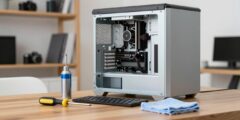
A slow computer can really slow you down. Did you know it takes about 5-10 minutes daily for your computer to start or load apps? Boosting your computer’s speed can make a big difference in how you work.
With pc optimization tips, you can make your computer much faster. This saves you time and reduces stress. In this article, we’ll show you how to enhance pc speed and keep your computer running well.

Key Takeaways
- Simple steps can significantly boost computer speed.
- Regular maintenance is crucial for optimal PC performance.
- Effective pc optimization tips can enhance overall user experience.
- Upgrading hardware can be a viable option for improving speed.
- Software tweaks can also contribute to faster computer performance.
The Impact of a Slow Computer on Productivity
In today’s fast world, a slow PC can really slow you down. Waiting for apps to open or files to move can waste a lot of time. This makes it hard to get work done efficiently.
Measuring the Cost of Slow Performance
A slow computer can cost money. For businesses, it means projects take longer, less money is made, and they can’t compete as well. A study by Microsoft found that a slow computer can cost a business up to $2,500 per employee per year.
Why Speed Matters in Today’s Digital Environment
In today’s world, speed is key. Everyone expects things to happen fast, whether you’re working from home or in an office. A fast PC helps you meet deadlines and stay on top of your work.
Work-from-Home Performance Demands
Remote workers face big challenges with slow computers. Without IT help, they can’t handle slow performance. This makes it hard to meet deadlines.
Gaming and Creative Applications
Gamers and creative people need fast PCs for their work. A slow computer can cause problems like lag and crashes. This can hurt their productivity and even their jobs.

Understanding What Causes PC Slowdown
Many things can make a PC slow. It’s important to know what they are. Both hardware and software problems can cause a PC to slow down.
Hardware Limitations
Old hardware can slow down a PC. Two main problems are old parts and overheating.
Aging Components
Older hardware doesn’t work as well. Outdated processors and not enough RAM can really slow things down. Upgrading can help a lot.
Thermal Throttling
When a PC gets too hot, it slows down to stay cool. Good cooling and cleaning dust can fix this.
Software Bloat and Background Processes
Too much software can slow a PC. Unused apps and services running in the background use up resources. Closing unused apps helps a lot.
Fragmentation and Storage Issues
Fragmented disks and storage problems also slow PCs. Disk fragmentation makes files hard to find. Using an SSD helps a lot. Also, having enough free space is key for fast performance.

Quick Wins: 5-Minute Fixes for Immediate Speed Improvement
You don’t need to be a tech expert to speed up your PC. Simple changes can make a big difference. A few quick fixes can greatly improve your computer’s performance.
Closing Unnecessary Background Applications
One easy way to speed up your PC is to close apps you don’t need. Many programs run in the background and use up resources without you knowing.
Using Task Manager Effectively
The Task Manager is a great tool for managing apps on your PC. To open it, press Ctrl + Shift + Esc. It lets you see and close apps you don’t need.

In Task Manager, you can sort apps by how much CPU, memory, and disk space they use. Closing apps that use a lot of resources can free up space.
| Application | CPU Usage | Memory Usage |
|---|---|---|
| Chrome | 10% | 2 GB |
| Slack | 5% | 1 GB |
| Background App | 20% | 3 GB |
Disabling Startup Programs
Turning off startup programs can also make your PC faster. Open Task Manager, go to the Startup tab, and turn off programs you don’t need to start automatically.
“Disabling unnecessary startup programs can reduce boot time and improve overall system performance.”
Clearing Temporary Files
Getting rid of temporary files can also speed up your PC. These files can take up a lot of space. Use the Disk Cleanup tool to remove them.
- Open Disk Cleanup by searching for it in the Start menu.
- Select the drive you want to clean up.
- Check the boxes next to the types of files you want to delete.
- Click OK to proceed.
By using these quick fixes, you can make your PC faster and more responsive. Keeping your PC in good shape is important for its performance.
How to Improve Your PC Speed Through Hardware Upgrades
Upgrading your PC’s hardware can make it run much faster. Focusing on key parts is key to better performance.
RAM Upgrades: When and How Much
Adding more RAM helps your PC handle many tasks at once. Most PCs use DDR4 RAM now, but DDR5 is becoming popular.
DDR4 vs. DDR5 Performance Differences
DDR5 is faster and uses less power than DDR4. Switching to DDR5 can really speed up your PC, especially for tasks that need lots of RAM.

SSD vs. HDD: The Performance Difference
Switching to an SSD from a traditional HDD makes your PC much faster. SSDs are great for quick access to files and apps.
NVMe vs. SATA SSDs
NVMe SSDs are even faster because they connect directly to the PCIe. They’re perfect for tasks that need top speed.
Graphics Card Considerations
For gamers and graphic designers, a good graphics card is essential. Upgrading it can make games run smoother and graphics render faster.
Improving your PC’s speed is easy with the right upgrades. Adding RAM, switching to an SSD, or getting a better graphics card all help. Each upgrade makes your PC faster and more efficient.
Optimizing Windows Settings for Maximum Performance
Windows settings are key to unlocking your PC’s full power. Tweaking certain settings can greatly boost your computer’s performance.
Performance Options and Visual Effects
To start optimizing Windows settings, adjust performance options and visual effects. Right-click on “This PC” and select “Properties.” Then, click on “Advanced system settings” and go to the “Performance” section. Here, you can choose “best performance” to disable visual effects and speed up your PC.
Power Plan Optimization
Optimizing your power plan also boosts performance. Go to “Power Options” in the Control Panel and pick the “High Performance” plan. This ensures your PC uses all resources to work efficiently.
Virtual Memory Management
Virtual memory is vital for better performance. To manage it, go to “Advanced system settings” and click on “Settings” under “Performance.” Then, go to the “Advanced” tab and click on “Change” under “Virtual memory.” Adjust the paging file size here.
Optimal Paging File Size
Choosing the right paging file size is key. Set it to 1.5 times your RAM. For example, with 8GB RAM, set it to 12GB.

| Setting | Default Value | Recommended Value |
|---|---|---|
| Paging File Size | System Managed | 1.5 x RAM |
| Power Plan | Balanced | High Performance |
| Visual Effects | Enabled | Disabled |
By making these changes, you can greatly improve your PC’s performance. Enjoy a smoother computing experience.
Cleaning Up Your Hard Drive for Better Speed
To make your slow PC faster, give it a good cleaning. A messy hard drive can slow things down. But, by getting rid of unwanted files and programs, you can make it run better.
Disk Cleanup and Defragmentation
Begin with disk cleanup to get rid of temporary files and more. Defragmentation is key too. It organizes your files so your PC can find them quicker. Use Windows tools like Disk Cleanup and Defragmentation to make it easy.
Uninstalling Unused Programs
Many programs on your PC are not needed. Uninstalling them can save a lot of space. Check your installed programs and remove anything you haven’t used in months.
Managing Large Files and Downloads
Big files and downloads use a lot of space. Think about using cloud storage solutions like Google Drive or Dropbox. They save space on your hard drive and let you access your files anywhere.
Cloud Storage Solutions
Cloud storage is a smart way to keep your files without using up space on your computer. Google Drive and Dropbox offer lots of free storage and work well with many apps.

Browser Optimization Techniques
Web applications are more important than ever. A well-optimized browser makes browsing better and boosts system performance.
Managing Extensions and Add-ons
Managing extensions and add-ons is key to browser optimization. While they add features, too many can slow your browser. Regularly review and disable or remove unused extensions to keep your browser fast.

Clearing Cache and Cookies
Clearing cache and cookies is another way to speed up your browser. Over time, they can slow it down. Regularly clearing these keeps your browsing smooth.
Choosing the Right Browser for Speed
The browser you choose affects your browsing speed. Some browsers are faster than others.
2023 Browser Performance Comparisons
Recent tests show Google Chrome and Microsoft Edge are fast. Edge might use less memory. But, the best browser for speed depends on your needs and system.
- Google Chrome: Known for its speed and extensive library of extensions.
- Microsoft Edge: Offers efficient memory usage and integration with Windows.
- Mozilla Firefox: A popular choice for those seeking a balance between speed and privacy features.
By using these browser optimization techniques, you can make your browsing faster and improve your system’s performance.
System Maintenance Best Practices
Regular system maintenance is key to keeping your PC fast and efficient. A few simple steps can boost your computer’s performance and make it last longer.
Regular Updates and Patches
It’s important to keep your operating system and software up-to-date. Updates fix security issues and improve system stability.
Windows Update Settings
To get the latest updates, check your Windows Update settings. You can set Windows to automatically download and install updates. This keeps your system current without you having to do it manually.
Scheduled Maintenance Tasks
Setting up regular maintenance tasks helps your system run smoothly. This includes disk cleanups, disk defragmentation, and malware checks. Use the Task Scheduler in Windows to run these tasks when you’re not using your PC.
Registry Cleaning: Myths and Facts
The idea of registry cleaning is often talked about. A cluttered registry might slow your system, but it’s not a big deal with modern operating systems. Be careful with registry cleaners, as they can cause problems if used wrong.
- Be wary of registry cleaners that promise unrealistic improvements.
- Manual registry editing is risky and should be avoided unless you’re experienced.
- Regular system maintenance, like updates and disk cleanups, is more effective for overall performance.

By following these system maintenance best practices, you can keep your PC running at its best. This ensures a faster and more reliable computing experience.
Advanced Techniques for Power Users
Advanced techniques let power users tweak their PC’s performance. They can make computing better, especially for tough tasks.
Overclocking Considerations
Overclocking means making hardware like the CPU and GPU run faster. But, it’s not without risks and benefits.
Risks and Benefits
Overclocking can boost performance but also raises the chance of overheating and damage. Users need to think about cooling solutions.
Custom Boot Configurations
Customizing boot settings can make your system start up faster. By choosing what launches at startup, you can make your system more responsive.
Process Priority Management
Managing process priority helps optimize system performance. By giving more resources to important apps, you can make demanding tasks run smoother.
| Technique | Benefit | Consideration |
|---|---|---|
| Overclocking | Increased Performance | Risk of Overheating |
| Custom Boot | Faster Startup | Configuration Complexity |
| Process Priority | Smoother Operation | Resource Allocation |
Latest Software Tools for PC Optimization in 2023
Now, making your PC faster and more efficient is easier than ever. In 2023, there are many software tools to choose from. They range from free to paid, each with its own special features.
Free vs. Paid Optimization Software
Choosing between free and paid PC optimization software is a common debate. Free tools like CCleaner provide basic cleaning and optimization. On the other hand, paid software such as Advanced SystemCare offers more comprehensive protection and performance boost.
AI-Powered Optimization Tools
AI has changed how we improve PC performance. These tools can spot and stop problems before they start. This makes your PC run smoother.
Machine Learning for Resource Management
Machine learning helps manage system resources better. It makes sure your PC uses its resources well. This leads to better performance and less lag.
Recommended Tools for Different Needs
Everyone has different needs. Gamers might look for tools that boost graphics and performance. General users might focus on cleaning and disk optimization.
| Tool | Primary Function | Cost |
|---|---|---|
| CCleaner | Disk Cleaning and Registry Optimization | Free/Paid |
| Advanced SystemCare | Comprehensive System Optimization and Protection | Paid |
| Razer Cortex | Gaming Performance Optimization | Free |
Avoiding Snake Oil: Tools to Stay Away From
Not all optimization tools are the same. Some might promise a lot but don’t deliver or even harm your PC. Always research and read reviews before installing any software.
When to Consider a Fresh Start: OS Reinstallation
If your computer is really slow, it might need a clean OS install. Over time, it can fill up with junk files and old software. If other fixes don’t work, it’s time for a new start.
Signs It’s Time for a Clean Install
Here are some signs your computer needs a fresh start:
- Frequent crashes or freezes
- Slow performance even after cleaning up files and programs
- Presence of malware that can’t be removed
- Corrupted system files
Reinstalling your OS can provide a clean slate, removing the root causes of these issues and restoring your computer’s performance.
Backing Up Essential Data
Before you start, back up your important files. This includes documents, photos, and videos. Use an external hard drive or cloud storage to keep your data safe. It’s always better to be safe than sorry when it comes to preserving your valuable information.
Step-by-Step Reinstallation Guide
Reinstalling your OS is easy:
- Create a backup of your important files.
- Obtain a valid installation media for your OS.
- Boot from the installation media and follow the prompts.
- Choose the clean install option and follow the installation process.
Windows 11 Clean Install Considerations
For Windows 11, make sure your computer meets the system requirements. During setup, you can choose to keep your files or start fresh.
“A clean install is the best way to ensure your system is free from any potential issues carried over from the previous installation.”
After setup, reinstall your drivers and essential software.
By following these steps, you can make your computer run like new again.
Conclusion: Maintaining Your Newly Optimized PC
After optimizing your PC, it’s key to keep it in top shape. Cleaning up temporary files and updating your system regularly helps a lot. Also, running disk cleanups keeps your PC running smoothly.
Set up regular maintenance tasks like disk defragmentation and malware checks. This stops your PC from slowing down. Also, think about what programs you install and where you store files. They can affect how fast your PC runs.
By following these tips, you can keep your PC fast and responsive. An optimized PC isn’t just about quick fixes. It’s about keeping it that way over time. With some regular care, your PC will stay in great condition.